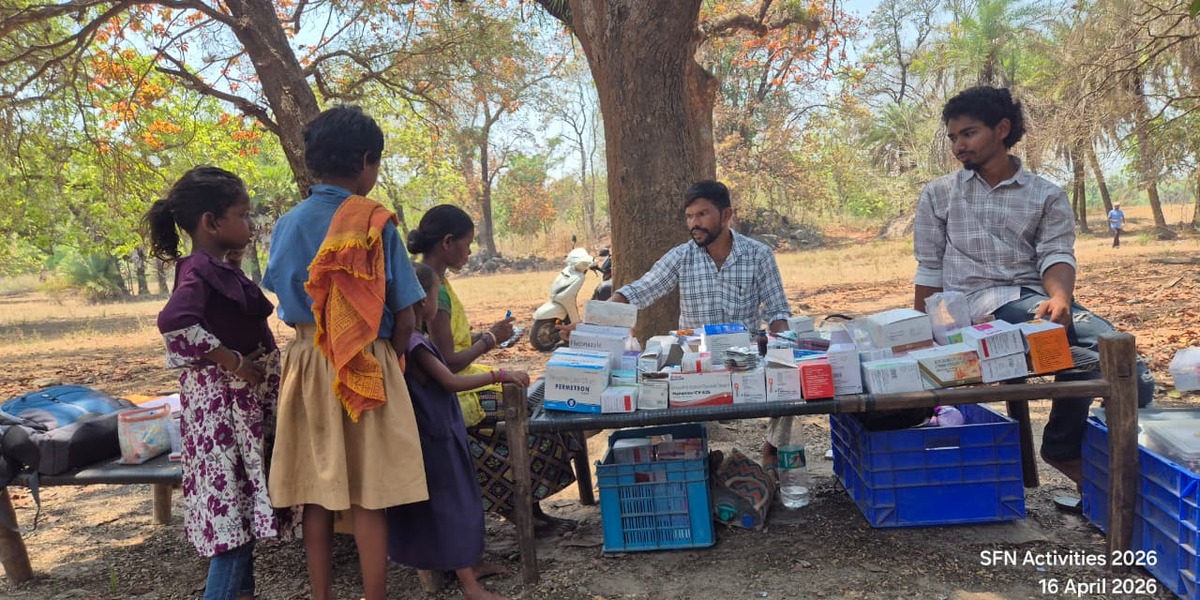
Heatwave Relief: Fund Ongoing Support for India's Most Vulnerable
Udayaa Leadership Team is organizing this campaign on behalf of
 Udayaa Foundation


Rs.0 raised of Rs.53,750 goal
35 day(s) left
0 donations
How we’ll use this fund
Reach 600 people across Hyderabad, Karnal, Chennai, Mumbai, and Delhi with direct, on-ground heatwave relief distributed by the Udayaa team in person Put ORS sachets, cotton gamchas, umbrellas, and tarpaulin shade into the hands of slum residents and outdoor workers who have no protection during peak hours Return for a second wave of intervention built entirely on what communities tell us they need, because a one-time distribution is not a response to a crisis that lasts months
WHO WE ARE AND WHY WE ARE DOING THIS
We are the Udayaa leadership team, a group of young people who have spent years building on-ground programs across India, and in the face of this summer's unprecedented heatwave, we decided that the right response was not to watch from a distance.
Udayaa is a student-led social impact platform, but the people running it have years of direct community work behind them, in tribal hamlets in Telangana and Andhra Pradesh, in urban slums in Hyderabad, and across the network of communities we have built relationships with through our campaigns. We are not new to this kind of work. What is new is the scale and intensity of what India is experiencing this summer, and the speed with which it is affecting people who already had no margin.
The decision to run this campaign ourselves, rather than funding an intermediary, came directly from that experience. We know what gets lost when relief passes through too many hands before it reaches someone. We know what it looks like when a distribution is designed around what is easy to give rather than what is actually needed. This campaign is our attempt to do it differently, which means going ourselves, asking real questions, and coming back.
THE PROBLEM
India's heatwave this year is not a variation on what has come before. The India Meteorological Department flagged above-normal heatwave days across northwest, central, and southern India from April through June 2026, and the Council on Energy, Environment and Water has documented that over half of India's districts, home to three quarters of the population, are now classified as being at high to very high heat risk.
In slum communities, those statistics translate into something specific and physical. Tin and corrugated iron rooftops, which cover the majority of informal housing across India's cities, absorb solar radiation at a rate that makes indoor temperatures unbearable long before noon, with some studies recording indoor temperatures in tin-sheet homes running 5 to 8 degrees higher than ambient air temperature. Outdoor workers, who make up the majority of the labor force in every city we are working in, have no cooling infrastructure, no ability to stop during peak hours, and in many cases no reliable access to clean water when it is most urgently needed. The elderly and very young, who cannot regulate body temperature as effectively, face the highest medical risk and receive the least attention.
Heat exhaustion does not announce itself loudly. It builds through the day, through dehydration, electrolyte loss, and sustained exposure, and by the time someone recognizes they are in danger, they are often already in serious difficulty. The gap between what is needed and what is available in these communities is not complicated to describe. It is just very large.
HOW WE'LL USE THIS FUND
- ORS sachets for slum residents and outdoor workers across all five cities, distributed in packs of two to three per person, because for someone spending eight hours in direct sun with no shade and no break, electrolyte loss is not a minor inconvenience but a genuine medical risk that builds quietly through the day.
- Cotton gamchas for workers in Karnal and Delhi, where the heat is dry and unrelenting and the people most exposed are daily wage laborers with nothing between them and direct sun for the full working day. A gamcha soaked in water and wrapped around the neck keeps working for hours, costs forty rupees, and is the kind of object that stays useful long after we have left.
- Umbrellas for elderly residents and street vendors in Hyderabad, Mumbai, and Delhi who cannot retreat indoors during peak hours and have no fixed shade structure to return to, making them among the most continuously exposed people in any given city during a heatwave.
- Tarpaulin shade structures in Chennai, where the combination of high temperatures and coastal humidity creates conditions that are harder on the body than dry heat at the same temperature, and where street market vendors and autorickshaw drivers work in direct sun across shifts that run through the hottest part of the day. The tarpaulins we put up stay up for the season, not just the afternoon.
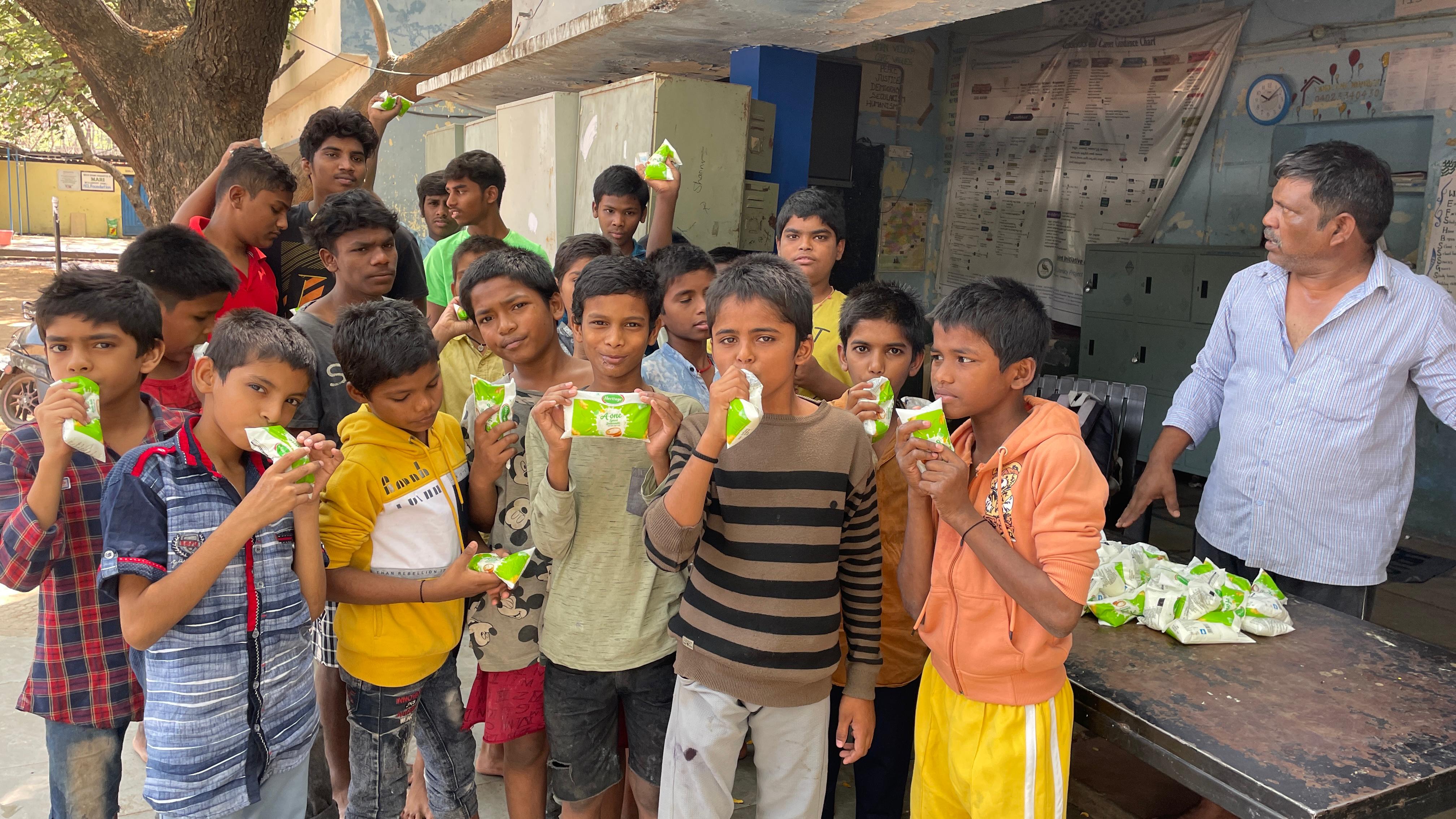
- Buttermilk in Hyderabad and Mumbai, freshly sourced locally and distributed alongside ORS, because hydration and electrolytes together do more than either does alone, and because buttermilk is something people in these communities already know, already trust, and will actually consume.
- A return visit, because the most important thing we are doing in Wave 1 is not just handing things over but asking, at every single distribution point, what the hardest part of this heat actually is for the people living through it. Wave 2 is funded by this campaign and built entirely on those answers.
WHY WE SELECTED THIS APPROACH
Most heatwave relief in India defaults to a single type of distribution, often buttermilk or water, delivered once, at one location, on one day. That approach is visible and fast to execute, but it addresses a few hours of one day and leaves the underlying exposure completely unchanged.
We chose a different set of interventions because we wanted what we distributed to keep working after we left. A cotton gamcha soaked in water keeps a worker's neck cool for hours and can be resoaked all day. A tarpaulin shade structure at a market covers six to ten vendors continuously for the entire season, not just the afternoon we happened to show up. An umbrella given to an elderly resident who goes out every morning to collect water or sell goods protects them every single day for the rest of the summer. ORS addresses the specific physiological mechanism through which heat becomes dangerous, which is not just temperature but electrolyte depletion, and it is one of the most evidence-backed low-cost interventions in emergency medicine.
We also chose to differentiate by city rather than distribute the same kit everywhere, because the heat does not feel the same in every place and the people most at risk are not the same in every context. Karnal is dry agricultural heat, and the people most exposed are construction laborers and brick kiln workers who are outside for the full working day. Chennai is coastal humidity combined with high temperatures, which is a different physiological challenge and demands shade and air movement more urgently than pure hydration. Hyderabad and Mumbai have dense slum populations living in tin-sheet homes that trap heat overnight and radiate it through the morning. Delhi has all of the above, with a particularly large elderly population in informal settlements who are among the most medically vulnerable to prolonged heat exposure.
Wave 2 exists because one distribution is not a heatwave response. It is a heatwave gesture. The real response is finding out what people need to get through the next two months, not just the next two hours, and doing something about it. That is what the second phase of this campaign is for.
EXACTLY WHERE WE WILL BE
We will be present in person in the following cities, working in slum areas and informal settlements where the need is highest:
- Hyderabad, reaching 100 people among slum residents and street vendors, distributing ORS, buttermilk, and umbrellas in communities we have existing relationships with through Project Annapurna and our on-ground network in Telangana.
- Karnal, reaching 50 people among outdoor and construction workers, with ORS sachets and cotton gamchas targeted at the daily wage laborers who are most continuously exposed to dry heat throughout the working day.
- Chennai, reaching 150 people among street market vendors and autorickshaw drivers, with tarpaulin shade structures that remain in place for the season and ORS and buttermilk distributed alongside.
- Mumbai, reaching 150 people among slum residents and informal workers, with ORS, umbrellas, and buttermilk distributed in high-density informal settlements where indoor temperatures in tin-sheet homes are extreme by mid-morning.
- Delhi, reaching 150 people among slum residents and elderly community members, with ORS, cotton gamchas, and umbrellas targeted specifically at older residents who are outside daily but have the least physiological capacity to manage sustained heat exposure.
In total, Wave 1 reaches 600 people. Wave 2 returns to each city within four weeks of the initial distribution, informed by what communities tell us on the ground.
Before donating, you should know: All funds collected by Udayaa Impact Foundation, a registered Section 8 nonprofit, with a full impact report published and shared with all donors on completion of both waves. 80G tax receipts issued to every donor.
35 day(s) left
We've raised
INR. 0
Our Goal
INR. 53,750
0 people have donated so far
TOP DONATION
Rs.0/-
RECENT DONATION
Rs.0/-
FIRST DONATION
Rs.0/-